


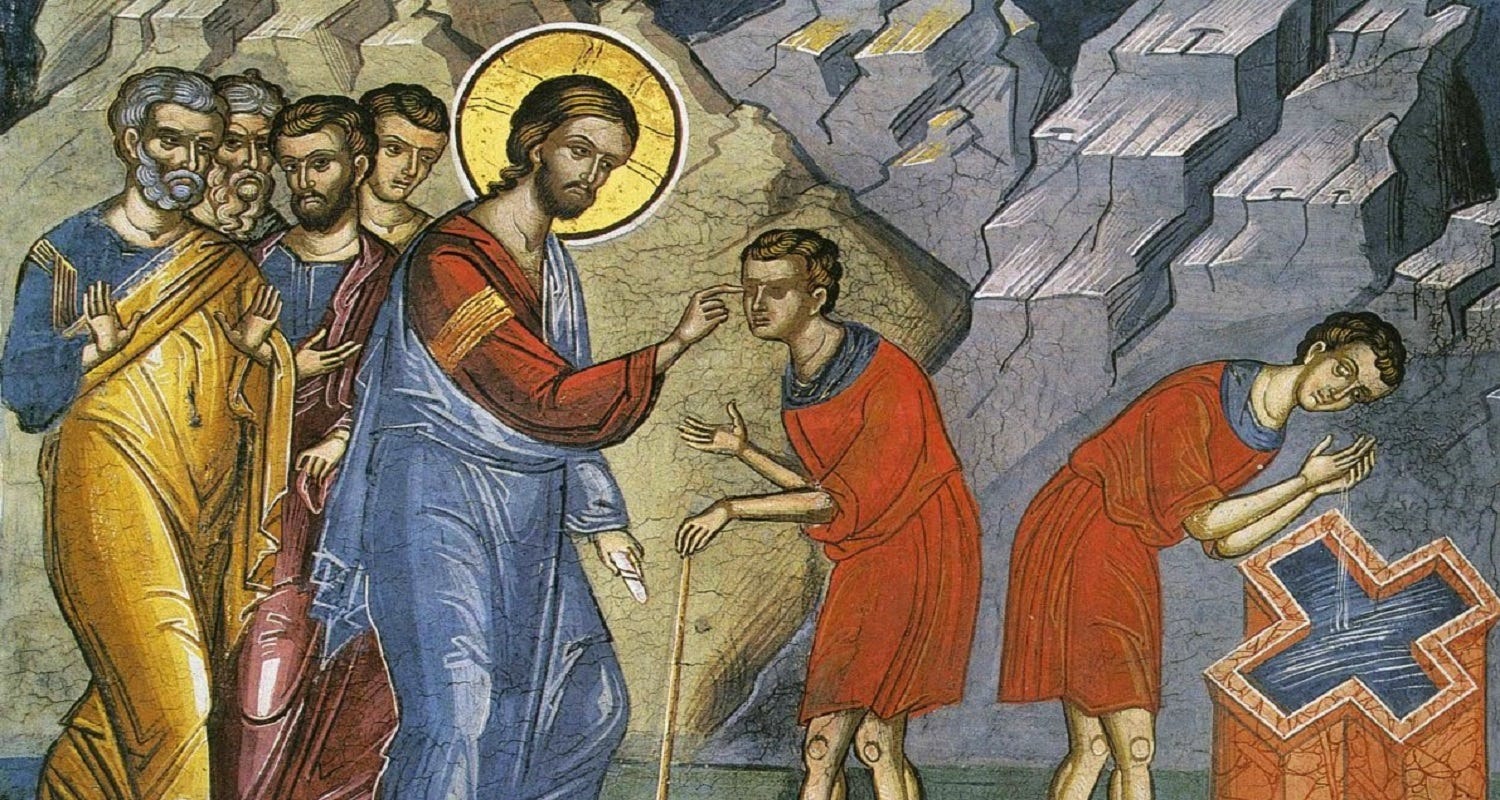
For the past several weeks, we have been walking alongside the man Jesus healed in John 9. We are following the journey of a man who had never seen the light of day. At first glance, this might seem like a simple healing. The disciples ask a question, Jesus sees the man, and then the man sees. Spit, dirt, mud, wash, sight.
This man’s newfound sight is not the end of the story. His healing is the beginning of trouble. As soon as the man can see, the neighbors no longer recognize him. He is then interrogated by the Pharisees. His parents keep him at a safe distance. The religious authorities grow more suspicious. And now, the once blind man has been thrown out of his local synagogue. Cut off. Cast out. Alone.
This is where we pick up today, “Jesus heard that they had driven him out, and when he found him…” Did you catch that? Jesus finds the man. Not at the moment of healing or when the crowds were buzzing. No, long after the buzz faded and the consequences were seen by all, Jesus found the man.
Frankly, this is already more honest than what is often passed for Christianity in our culture. We (and by we I mean people who have the same title as me) tend to sell faith as an optional upgrade or life enhancement for those who want (or we think should) get their act together. But John 9 says something different. Sometimes, seeing Jesus clearly will cost you more than you expected. Following Christ may not make your life easier. It will make your life truer. And those things are not the same.
Jesus finds the man and asks him a question,” Do you believe in the Son of Man?” Now, if we have been paying attention, this moment should be odd. This man has already shown remarkable faith. He obeyed Jesus when he could not see. He washed when it did not make sense. He testified before the Pharisees. He stood his ground as everyone close to him backed away. If anyone had “checked the right boxes,” it was this guy.
And yet, when Jesus asks him the question, the man responds with, “And who is he, sir? Tell me so that I might believe in him.” Which means that after everything—blindness, spit, mud, washing, interrogations—he still does not fully see. To be clear, this is not a failure. This is faith, because faith is not always certain or clear. It is trust. It is moving before everything makes sense. It is telling the truth before you have all the answers. It is standing your ground when you cannot yet name exactly who it is you are standing for. This man has had his sight since verse 7, but (and we all know big buts don’t lie) only now is he beginning to see.
Theologian Frederick Bruner calls this the “Beatitude of Truth.” Blessed are those who are kicked out for telling the truth and standing up for me; theirs is the Kingdom, and I am their King. That sounds suspiciously like something Jesus said earlier, “Blessed are you when people revile you and persecute you on my account.” We do not much like that Beatitdue. We prefer the ones about mercy and peacemaking. Those are easier to put on our Glebe Road sign. “Blessed are the thrown out,” does not sell.
And yet, here it is. This man has lost everything that once gave him his identity. His place in the synagogue, his standing in the community, his religious home. And according to Jesus, these are not signs that anything has gone wrong. It may be the clearest sign that something has gone right. There are times when you are most aligned with Jesus and least aligned with everything else.
Then, Jesus says something extraordinary, “You have seen him, and the one speaking with you is he.” We are at the turning point. Jesus reveals himself. But notice how he does it. No blinding light or heavenly chorus. No overwhelming display of glory to be seen. Just one sentence, “You have seen him.”
Jesus reveals just enough of himself to make faith possible and hides just enough of himself to make faith necessary. God does not overwhelm us into belief, or remove all ambiguity, or answer every question. God gives us just enough light to trust, which is both a gift and frustrating. Most of us prefer certainty. We would prefer a God who makes everything obvious, a faith that comes with a satisfaction guarantee. We prefer discipleship without the risk. But that is not the way of Jesus. Christ does not hand us certainty. He gives us himself and then invites us to trust him.
The man responds in the only way left, “Lord, I believe,” and he worships Jesus. This is the first moment in the chapter when everything becomes still. No arguments or debates. No defenses. Just worship. The blind man now sees, not just with his eyes but with his whole being.
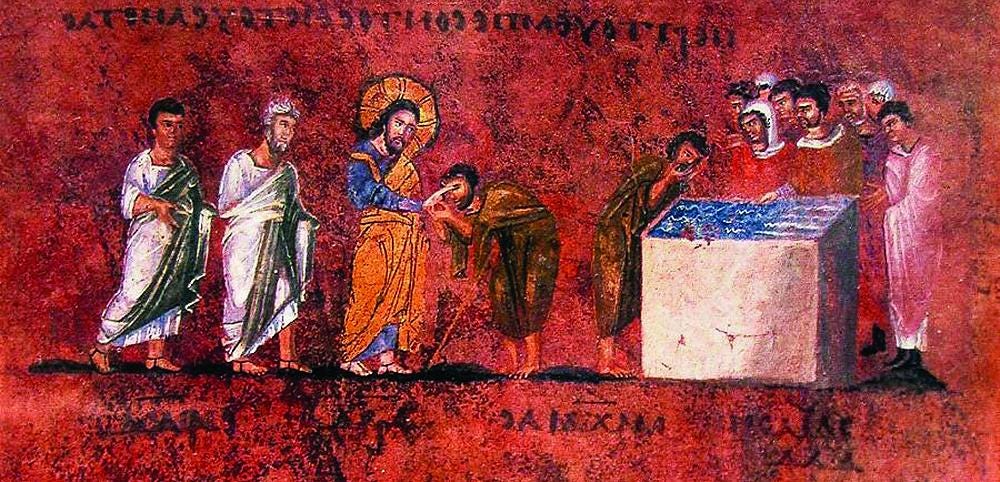
And here is the deep irony of John 9: the only person who can truly see is the one who knows he couldn’t.
Then, Jesus says something that makes those with ears to hear uncomfortable: “I came into this world for judgment so that those who do not see may see, and those who do see may become blind.” The problem in John 9 is not blindness. The problem is the refusal to admit it.
The Pharisees overhear and ask, “Surely we are not blind, are we?” it is almost the right question. Almost. But they already know the answer. Jesus says, “If you were blind, you would not have sin. But now you say, ‘we see,’ your sin remains.” In other words, the only thing worse than being blind is being convinced you can see.
That is where the story ends. There is no clear resolution or moral lesson. We finish with division: one man, cast out, worshiping Jesus, and a group of religious leaders, still inside, still in charge, and unable to see.
We are in the home stretch of Lent. We will soon trade the purple paraments for white, and the missing “Alleluias” will return. If Lent has been about anything, it has not been about self-improvement. This is a season for stripping away. Stripping away our illusions, our certainty, our need to be right, the assumption that we see clearly, so that we can see Christ.
And here is the hard truth: we only see Jesus clearly when everything has been stripped away. When the institutions we have doubled down on fail us. When the identities we cling to collapse. When the voices we have relied on fall silent. That is not where we expect to find Christ, but it is often where he finds us.
And when he does, he does not overwhelm us. He does not explain away our doubts. He softly says, “You have seen him.” And then waits.
Then, the invitation is not to see everything clearly. The invitation is to say, “I do not yet see, but I want to.” Because that is where grace begins. Not with certainty but with confession. Not with clarity but with trust.
Here’s the gospel: the man does not find Jesus. Jesus finds him. After rejection, after loss, and after the cost, Jesus finds him.
And the same is true for you. You do not have to have your vision right before Christ comes near. You do not have to solve the mystery before you can believe. You do not have to see everything with 20/20 vision, because the One who sees you has already come looking.
“Lord, I believe.” And they worshipped him.
Amen.


