


Anyone who has ever been called to testify in a courtroom knows the moment. Your name is called. You stand and walk forward. You raise your right hand and swear to tell the truth. And when you sit down in the witness box, something changes. You are no longer an observer. You are a witness. Your testimony carries weight. What you say can clarify the truth or cloud it. Every eye in the room is on you.
That is the atmosphere of the Gospel of John, chapter 9.
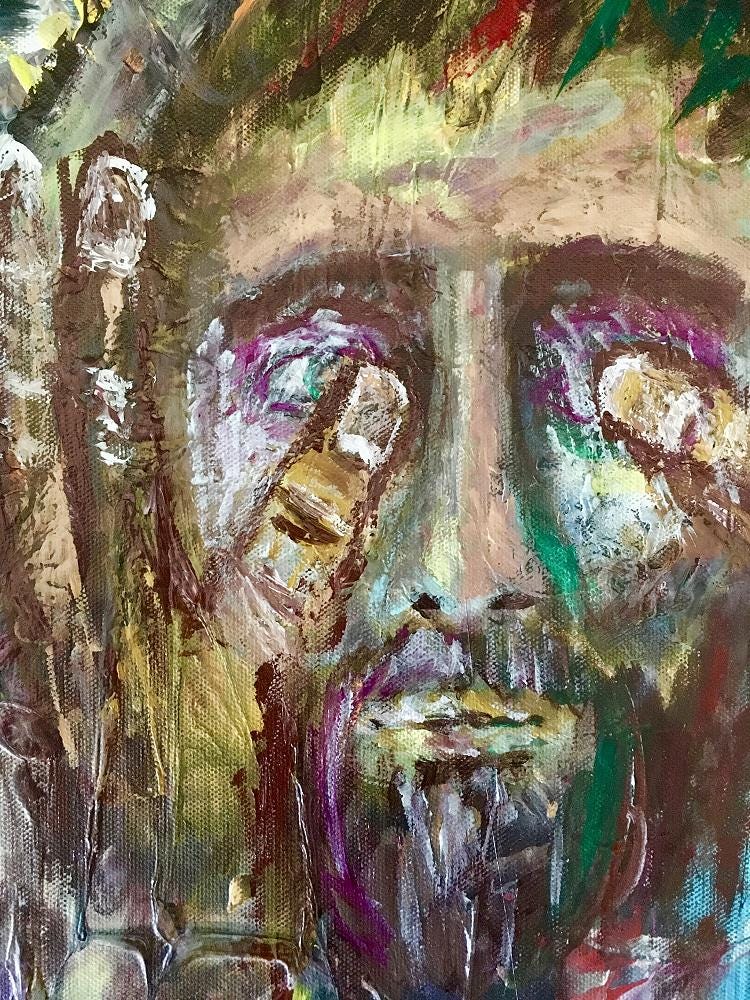
During Lent, we are working through this chapter, which tells the story of the man born blind whom Jesus heals. It is one of the most fascinating stories in the Gospel because once the miracle happens, the story does not end. Instead, it turns into something like a trial.
The miracle is not the final act.
The neighbors question the man. The religious authorities question him again. And now, the man’s parents are summoned. The last two weeks of this chapter sound read like a courtroom drama where everyone is trying to figure out what to do with the inconvenient fact standing right in front of them.
A man who used to be blind can now see.
The religious leaders want an argument. What they have instead is evidence.
Yesterday, the man was blind. Today he sees.
That is not a theological theory. That is a problem.
And that is what makes the story so uncomfortable. The religious authorities are not debating an abstract doctrine about Jesus. They are staring at the results of his work.
The theologian Dietrich Bonhoeffer once argued that the sermon does not come from universal truths or emotional experiences. The sermon comes from the incarnation of Jesus Christ himself. As Bonhoeffer puts it, “The sermon derives from the incarnation of Jesus Christ and is determined by the incarnation of Jesus Christ. The word of the sermon is the incarnate Christ. Hence the sermon is actually Christ. Christ as the Word. As the Word, Christ walks through the church-community.”
That is a staggering claim.
Preaching is not merely talking about Jesus. In some mysterious way, Christ himself moves through the community when the Word is proclaimed.
And something like that is happening in John 9.
By the time the questioning begins, Jesus has already slipped away from the scene. But his work has not. The man who was healed is standing there in the middle of the community as living evidence of what the Word made flesh can do.
The religious leaders want a debate about theology.
Instead, they are staring at it.
John’s Gospel calls miracles “signs.” A sign does not exist for its own sake. A sign points to something deeper. The healing reveals who Jesus is.
And the uncomfortable truth about revelation is that once it appears, people have to decide what to do with it.
You can celebrate it. You can deny it. Or you can interrogate it until the evidence becomes inconvenient enough to ignore.
That last option is often the preferred strategy of religious institutions.
Which brings us to the parents.
The authorities call them in to testify.
“Is this your son?”
Yes.
“Was he born blind?”
Yes.
“So how does he now see?”
And suddenly, the witness stand becomes a dangerous place to sit.
Because the parents know the answers. They know their son was born blind. They know he can now see. And they know exactly who did it.
Jesus.
But the Gospel tells us something important about this moment. The authorities had already decided that anyone who confessed Jesus as the Messiah would be expelled from the synagogue.
That might sound minor to us, but in the first century, it meant far more than simply losing a place to worship. The synagogue was the center of Jewish life. It was where your family prayed, where your children learned the Scriptures, where your reputation was known, and where your relationships were formed. To be cast out of the synagogue meant losing your community, your social standing, and often your economic life as well.
It meant exile.
Which means the parents are not simply answering religious questions. They are weighing the cost of telling the truth.
They know their son was blind. They know he now sees. And they know exactly who did it. But they also know what will happen if they say his name.
So they do something very careful. They tell the truth, but not the whole truth.
“We know this is our son.”
“We know he was born blind.”
“How he now sees? We do not know. Ask him.”
It is not exactly a lie.
It is quieter than that.
It is fear trimming the truth down to a safer size.
And before we judge the parents too quickly, we should admit how familiar that feels.
Because the truth about Jesus has always carried consequences.
For most of us, confessing Christ will not get us expelled from a synagogue. But it can still cost us something. It can cost us approval in rooms where faith is expected to remain private. It can cost us credibility in professional spaces where belief is treated as something quaint or embarrassing. It can cost us comfort in social circles where the name of Jesus is welcome only as long as it stays quiet and non-disruptive.
And so we learn to do what the parents did.
We confirm the safe facts.
Yes, we believe in God. Yes, faith matters to us. But when the moment comes to speak clearly about Jesus, we sometimes grow cautious. Ask someone else.
The Gospel presses a quiet but uncomfortable question on everyone who hears this story.
The question is not whether the miracle happened.
The question is what we do when the evidence of Christ’s work stands in front of us.
Sometimes that evidence appears in Scripture.
Sometimes it appears in the life of someone whose life has been changed.
Sometimes it appears in the quiet but stubborn witness of the church.
Bonhoeffer was right.
Christ still walks through communities where the Word is spoken.
Which means the real question is not whether Christ is present.
The real question is whether we are willing to testify to what we see.
And Lent has a way of putting us on the stand and asking the question we would rather avoid.
Whose opinion do we fear more?
The crowd?
Our friends?
Our colleagues?
The powers that shape our lives?
Or the One who opened the eyes of the blind?
Because when the moment comes, when the questions are asked, when the room grows quiet and the pressure rises, the church remembers something important.
Christ has already taken the stand for us.
And now the church simply tells what it has seen. Amen.


