


Paul’s letter to the Corinthians contains none of the credentials that mattered most in that city. No rhetorical fireworks. No philosophical flexing. No polished performance that would signal that he belonged.
“I did not come proclaiming the mystery of God to you in lofty words or wisdom,” Paul writes. That is not false humility. It is a decision.
Because Paul knows exactly how the game is played in Corinth. Corinth rewards eloquence. In Corinth, wisdom is currency and knowledge is power. The more you know, the more authority you carry. A sharp argument legitimizes your voice.
Sound familiar?
Most of us have been formed by a system that taught this early: you go to school, learn the material, and ace the test. Your final grade becomes your credential, and we all know that credentials open doors. Novice to expert, over time. And eventually, people will start listening to you. Not because you are “right,” but because you are “qualified.”
Don’t mishear me. Formation is not bad, and education teaches us to think clearly, work responsibly, and serve faithfully. Sam Seaborn, fictional Deputy Communications Director to fictional President Josiah Bartlet, is correct in his assertion that education is the silver bullet. The problem is not schooling. The problem is that we often assume God works the same way. Without realizing it, faith can become something we master, something we prove. Some assume spiritual maturity is the same as expertise and that closeness to God increases as we accumulate knowledge. If you know enough scripture, theology, or religious language, then we will finally qualify to speak about God with confidence.
So, we drag our transcripts and past assignments with us into a life of faith only to have Paul say something that quietly dismantles the entire system: “I decided to know nothing among you except Jesus Christ, and him crucified.”
God’s wisdom is revealed, not achieved.
“In weakness and in fear and in much trembling,” says Paul. That is not a posture we have been taught to admire or encourage because it does not sound like leadership or confidence or authority. It does not sound like power.
Paul is not looking for power that can be manufactured.
“My speech and my proclamation were not with plausible words of wisdom,” he says, “but with a demonstration of the Spirit and of power.”
The word “power” matters. Paul is not saying that no power is present. He is saying the power present came from somewhere else. Not from persuasion or technique or performance. But from the Holy Spirit.
And here is the reason Paul offers… “So that your faith might rest not on human wisdom but on the power of God.”
Faith built on human wisdom is fragile. It will collapse the moment the argument fails. A faith built on the brilliance of the preacher’s words fails the moment the preacher disappoints. But a faith built on the movement and power of the Holy Spirit endures because it does not depend on us holding anything together.
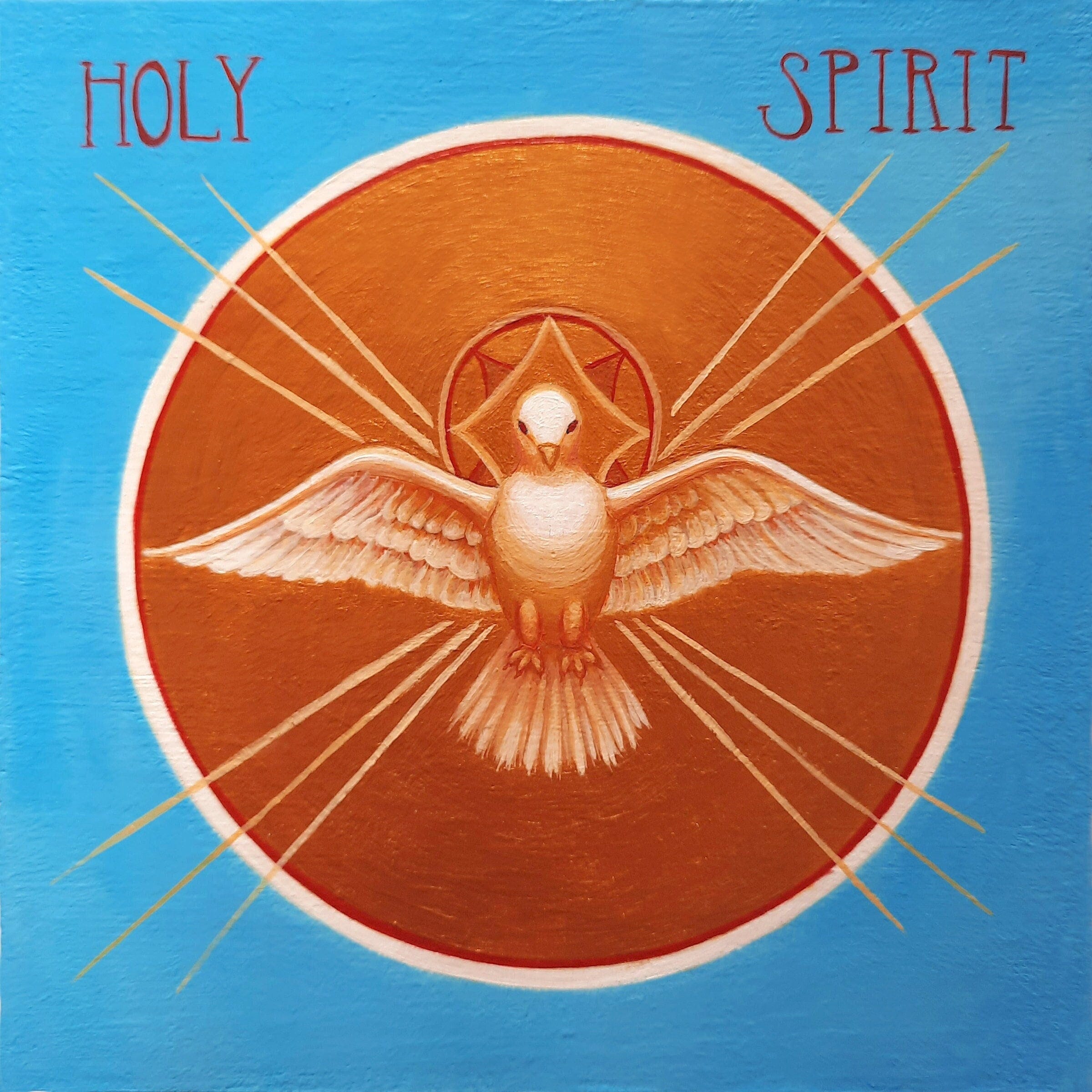
Paul continues to press the issue. God’s wisdom, he says, is hidden. Not because God is interested in playing games, but because God’s wisdom cannot be possessed. It is given. What no eye has seen, or ear has heard, God revealed through the Holy Spirit.
Which means that to know God is not primarily an act of the mind. It is an act of communion.
The Holy Spirit is not merely an informant. The Holy Spirit dwells within us, making God present and revealing Christ not as an idea to be understood but as new life received.
Too often, we miss that the wisdom God reveals does not stop with how we understand God. It reshapes how we see one another.
The empire has taught us to see one another through the lens of credentias: achievement, productivity, usefulness, and worthiness. The empire is always sorting, ranking, and measuring. It decides who matters, who belongs, who deserves a voice, and who should shut up. But the wisdom of God refuses that system altogether.
The wisdom of God assumes the shape of the cross. Meaning it cannot be used to dominate or control. The cross of Christ dismantles the hierarchy the empire depends on by exposing the lie that power belongs to the strong and worth belongs to the accomplished.
Spirit-given wisdom enables us to see what the empire cannot: to recognize that those deemed disposable or deportable are first and foremost deemed beloved. And that no amount of empire-endorsed devaluation can change this.
We are challenged to value people not for what they contribute or produce but for who God claims them to be. Which is why we so often resist the work of the Holy Spirit. Because once the Spirit reveals God’s wisdom, the empire’s expectations lose their grip. We are freed from the lie that our value must be earned. Freed from the harm of endless comparison. Freed from the pressure to justify our existence through productivity or perfection.
The Holy Spirit gives us the wisdom to say no.
No to systems that survive by telling us and others we are never enough.
No to narratives that make our neighbors’ worth conditional.
No to forms of power that require someone else’s to diminish.
This is what Paul means when he says we have received the Holy Spirit, “so that we may understand the gifts bestowed on us by God.”
Chief among these gifts ist he ability to see rightly. To see ourselves and one another not as the empire names us but as God does.
And that kind of vision is dangerous.
Dangerous for any system that depends on fear.
Dangerous for any power that survives by ranking.
Dangerous for any empire that requires us to forget that every person we encounter, every person fullstop, bears the image of God.
This is why the Holy Spirit is not something to fear. The Holy Spirit is not here to embarrass us or turn faith into a spectacle. The Spirit of God is here to do what we cannot do for ourselves. To reveal God when we cannot reason our way there.
To form faith when our confidence runs out.
To teach us to see one another truthfully.
To free us from the expectations and harm of the empire.
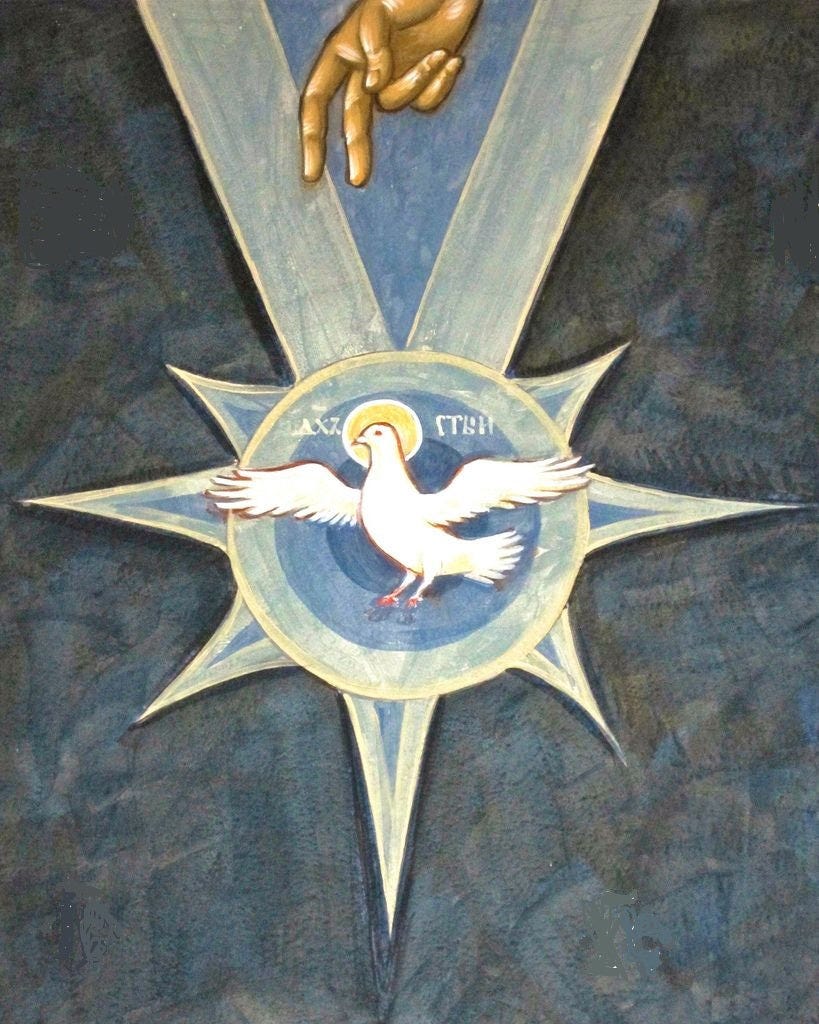
And here is the good news Paul refuses to let us miss.
The Spirit does not wait until we get this right.
The Spirit does not arrive once we are finally wise enough, faithful enough, or qualified enough.
The Spirit is already given.
Which means your worth is not pending. Your belonging is not conditional. Your place in God’s life is not something you achieve.
“We have received the Spirit,” Paul says. “We have the mind of Christ.”
Not because we earned it. Not because we mastered anything. But because God, in sheer grace, has chosen to dwell with us.
That is real power. And that is very good news. Amen.


