


For the last three weeks, we have walked through John 9, albeit slowly. The healing of the man born blind is the longest and most detailed scene in the Gospels. Multiple acts over 41 verses unfold the real-time consequences of Jesus healing a man who had been blind since birth.
The chapter begins with Jesus and the disciples passing a man who had never seen the light of day. Seeing the man as a theological problem to be solved, the disciples ask, “Rabbi, who sinned, this man or his parents, that he was born blind?” The disciples are looking for an explanation for the man’s suffering. Jesus refuses the premise of their question. He kneels, mixes spit and dust, wipes the mud on the man’s face, and tells him to wash in the pool of Siloan.
The man returns with his sight. And there, the story could end. A miracle. A sign. A healed. Roll the credits.
But in the Gospel of John, the sign is rarely the end. The real drama begins as the community tries to place meaning on what happened. The neighbors are confused. The Pharisees are suspicious. And today, the man is hauled back before the religious authorities for questioning.
But have you noticed something strange? Jesus is not there. It appears he has slipped away and is never directly confronted, which becomes the problem. Because the religious leaders think they are questioning the man, but the truth is, they are questioning Jesus.
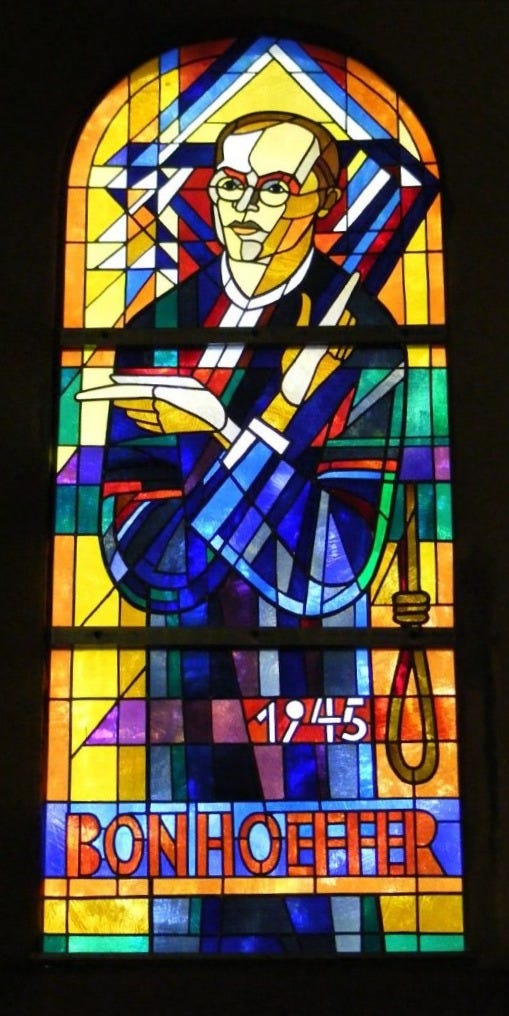
Last Sunday, I told you about Dietrich Bonhoeffer’s argument that the sermon does not come from the preacher’s emotional experiences or universal truths. The sermon comes from the Incarnation of Christ himself. But Bonhoeffer is not done there. He says that because the sermon is grounded in the incarnate Christ, Christ himself walks through the church. Take that a step further. If Christ walks through the church, then Christ walks through the world through his people. Preaching is not merely talking about Jesus. In some mysterious way, Christ moves through our community every time the Word of God is proclaimed and believed. And at this point in John 9, that is exactly what is happening.
Jesus has left the scene, but his work has not. The man who was healed now stands in the middle of his community as living evidence of what the Word Made Flesh can do. The religious leaders, like the disciples, want a theological debate. They want a tidy discussion about doctrine and Sabbath rules. But instead, they are confronted with something far more disruptive: God’s mercy walking around in public. Grace made visible through skin, bones, and eyes that can now see. Which means the leaders are not simply questioning the healed man. They are face-to-face with the disruptive presence of Christ in a transformed life.
They appeal to what they know. Moses. Tradition. Authority. They say, “We know this man, Jesus, is a sinner.” The healed man appeals to something else entirely. He says, “What I do know is this: I was blind, and now I see.” Notice the contrast. The religious leaders appeal to their system. The man appeals to what God has done. They have certainty. He has mercy. They have a religious structure to defend. He has sight. And that difference matters.
The fuse has now been lit. Pressed for the third time, the healed man responds, “Why do you want to hear it again? Do you also want to become his disciples?” Now the interrogation becomes a confrontation.
All week, I have been wondering where the man found this courage. Remember, this is the man who once sat on the roadside begging. Now he is standing toe-to-toe with the most powerful religious leaders in town. Where did that courage come from?
The answer is obvious, easy, and at the same time not obvious or easy: grace. The man was blind, and Jesus healed him. And once your sight is restored, once you see clearly, it becomes very difficult to pretend otherwise. The man is not brave because of his personality. He is brave because of what Christ has done for him. Jesus opened his eyes, and once you have seen the mercy of God up close, you cannot simply go along to get along. His story widens beyond himself. And that is how it always works.
Everyone whom Christ has ever touched stands somewhere in this story. We may not have had mud washed on our eyes, but every one of us has needed Jesus to do for us that we could not do for ourselves. Which means the Church is nothing more and nothing less than a community of people whose sight has been restored. And healed people cannot pretend not to see.
A seminary professor of mine once put it like this: “God embraces us when we are most covered in mud, cleans us off, and sends us out.” That is what is happening in John 9. Jesus meets a man in the dust, touches what is broken, restores him, and sends him back into the world.
But notice what happens next. The healing does not lead to applause. It leads to questions and confrontation. Because throughout his ministry, Jesus keeps running into the same problem: the powers. Religious power. Political power. Social power. Powers that depend on people pretending not to see what they are really seeing.
Everywhere Jesus goes, he disrupts systems that depend on blindness. He heals on the Sabbath. He touches the untouchable. He forgives sinners. He welcomes the outsider. He announces a kingdom that does not belong to Caesar. And when mercy starts walking around in public like that, the powers get nervous.
So they interrogate the healed man. They throw him out of the synagogue. And eventually they will nail Jesus to a cross because the cross is not an unfortunate accident at the end of Jesus’ ministry. The cross is what happens when God’s redeeming work confronts the powers of the world, and the powers decide they would rather kill than heal.
The healed man tells the truth, and he is cast out. Christ tells the truth, and he is nailed to a tree. But here is the strange and dangerous thing about the gospel. The powers never seem to realize what they have done. Because the cross reveals something the powers of the world will never understand, the grace of God does not stop when it is rejected, and Truth does not die when it is crucified.
God raises the Crucified One from the dead. Which means the powers are not nearly as powerful as they think they are. And it means the Word Made Flesh continues to walk through the world. In the lives he has changed. In the witness of those who now see clearly. In the church that refuses to pretend that blindness is sight.
Church, as Christ’s body, we cannot spend our lives protecting institutions while ignoring mercy. We cannot flatter the powers of this world while the vulnerable are crushed. We cannot pretend not to see. Healed people cannot pretend not to see.
The powers nailed Jesus to a tree to keep the world the way it was. God raised him from the dead to make the world the way it will be.


