


There is a moment near the end of every good visit, meal, or party when someone has to ruin the event by saying, “I guess we should probably get going.”
Rarely do people like being this person. Unless the evening has been a total disaster, there’s usually a reluctance to the statement.
The statement casts a spell, and the evening is broken. The plates begin to be cleared. The leftovers are packed up. As they pull their keys from their pocket, someone will say, “We should do this again sometime,” which can mean “I love you dearly “or “I’ll see you in 2036.”
Endings are strange like that. They can be sentimental and clumsy. Endings can make us say things we should have said earlier, as we linger at doorways because we know that as soon as we cross the threshold, everything will change.
And today, I will be the one to ruin the moment and say, “I guess I should probably get going.” Today is my last Sunday at Walker Chapel, which makes this my last sermon.

When this date hit my calendar, I knew I wanted my last two sermons to be themed, “The Airing of Grievances.” The theme felt on brand.
Last Sunday, my grievance was “You Are Hard to Love.” Which, as I said last week, is not an insult. It is a fairly honest doctrine of the church and humanity. You are as hard to love as I am. Jesus does not command us to love one another because Christians are effortlessly delightful. Christ commands His disciples to love one another because He knows exactly what He is working with.
So, if you thought that was bad, today is worse. My final grievance is this: you made me grateful. And I was not prepared for that.
I had an idea of how today would go. There was a good and sensible plan. I was going to keep things light, crack a few jokes, throw in a big but, tell you that God loves you, say thank you, and get out of here. But then, Paul had to go and write Philippians.
“I thank my God in all my remembrance of you,”[i] Paul writes, “always in every prayer of mine for you all making my prayer with joy.”[ii]
Paul is in jail, which means this greeting is not a greeting-card sentiment. The Philippian church is anxious. They are worried about their imprisoned leader and about their own suffering. And then, on top of their worries, there is tension within the congregation. There are conflicts and questions, and pressures and uncertainties, and still, Paul says, “I thank my God in all my remembrance of you.”[iii]
That is gratitude in the light of the gospel. Gratitude in the light of Christ does not pretend that everything was or is perfect. It tells the truth that God was and is faithful through it all.
There is a cheap form of gratitude that only works when things are easy. It is fragile and overly sentimental and cannot stand up when life becomes difficult. But gospel gratitude is sturdier than that.
Gospel gratitude can look back at a situation or season of life and say, with all honesty, “God was there.” God was there in the joy. In the grief. In the baptisms and funerals. In the hospital rooms. In the shared meals. In the meetings and Bible studies. In thy hymns sung with full hearts or as whispered prayers.
God was there when the church felt strong, and God was there when the church felt tired.
Gratitude is not pretending it was all easy. Gratitude is telling the truth that God has been faithful.
Gratitude does not mean everything is finished. Gratitude means we can trust that the One who has and is still calling us together.
That is why Paul can say, “I thank my God in all my remembrance of you.”[iv] Not because the Philippian church was perfect, but because God was present.
Then Paul gives us the line that is the heart of his opening to the Philippians, and maybe the heart of my goodbye to you: “And I am sure of this, that he who began a good work in you will bring it to completion at the day of Jesus Christ.”[v]
Paul’s confidence is not in the church’s perfection. His confidence is in God’s faithfulness. Everything comes back to the faithfulness of God.
That is the gospel claim for us in this season of transition. The good work of Walker Chapel has never been dependent on one pastor, one season, one ministry, one donor, one volunteer, or one beloved saint who, in their day, knew where everything was and somehow controlled the entire church.
All of the good work of the Church belongs to God. God began it. God sustains it. God will complete it.
That does not mean our work is done or that it does not matter. It means our work is not ultimate.
This is good news because pastors leave. People move. Ministries change. Buildings age and children grow up. New people arrive and sit in a seat once occupied by a beloved saint of the church.
When change happens in a church, it can feel like Jesus has packed up and left town. Change happens because life happens. And, Jesus is not saying farewell. He remains the head of the Church.
Which means Walker Chapel’s future is not secured by your ability to recreate the past or ever create your own future. Walker Chapel’s future is secured by the God who raises the dead.
And that means the question is not “How can we keep everything exactly the same or the way Pastor Teer did it?” It cannot be those questions because they are taxidermy, and I have been in your homes and have yet to see taxidermy in Arlington or McLean. No, the question is “How do we remain open to the God who is still at work?”
“And I am sure of this, that he who began a good work in you will bring it to completion at the day of Jesus Christ.”[vi]
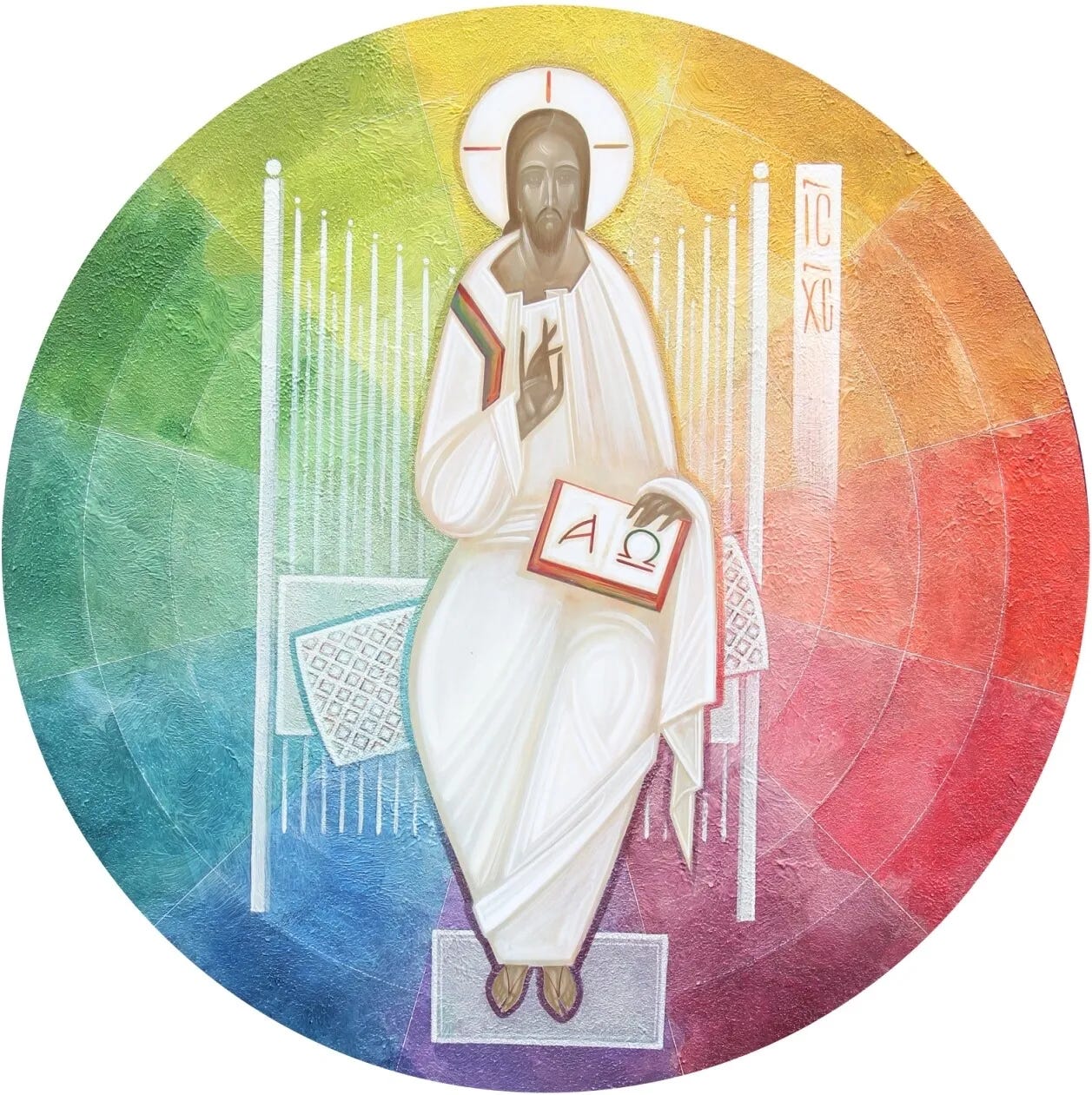
Completion means being drawn more and more into the life, death, and resurrection of Christ.
Pastoral transitions do not mean that God is finished with any church. God is not done with the love that is practiced here, however imperfectly, among people who might never have imagined gathering together if not for grace. Love practiced by a congregation and preacher who are, at times, hard to love.
And that is why Paul’s gratitude turns into prayer.
Paul’s prayer for the church is that their love may overflow. More and more.[vii] He is praying for love, wisdom, discernment, and courage. Love that can tell the difference between what matters and what is noise. Love that can keep the main thing the main thing. Love that looks like Jesus.
And that is my prayer for you. That your love may overflow more and more.
I know love is not easy. Humanity is lovely. Actual humans, at times, can be tough. But this is where Jesus has put us. Not in an abstract community of agreeable people, but in a church where love is more than a slogan.
I have seen that love here.
In the way you gather week after week to proclaim the same old song of grace.
In the way you feed families at Community Assistance.
In the way you welcome children.
In the way you show up at hospital waiting rooms and funerals.
I have seen the way you laugh, serve, and sing together.
I have seen this love when you get it right and when you had to apologise.
I have seen this love when we were at our best and when we had to take a step back and remember our calling.
That love is good work, and it belongs to God.
Paul writes to the Philippians with deep affection, but he does not make them dependent on him. He does not say, “You will never make it without me.” If he had, that would be terrible theology and leadership, not to mention exhausting.
Pastors who imply that the church cannot survive without them have confused ordination with messiah complex. The church does not need any pastor to be its Savior. The church already has one. And, it is not Paul or me. Thanks be to God for that.
And I can leave Walker Chapel with gratitude because I am confident of this: the One who began the good work among you will bring it to completion. That is not confidence boosted by sentiment. That is confidence in the resurrection of Jesus.
The God who began this good work is the God who will, by grace, see it to completion. This is the God who called Abram and Sarah, liberated Israel, spoke through the prophets, took on flesh in Jesus, welcomed sinners, touched lepers, forgives sins, broke bread, died on a cross, and got up from the grave.
And God keeps going. Still forgiving. Still calling. Still sending. And still feeding us at Christ’s table.
Jesus’ table tells the truth better than any goodbye can, because, at His table, Jesus gathers people who are still unfinished. The grateful and the grieving. The faithful and the afraid. You are not invited to the meal because you have completed good works. Christ’s invitation says, “Come and be fed so that I can send you.”
That is why my final word to you is gratitude. Not because everything was or is perfect. Or, because leaving is easy. My final work to you is gratitude because God is faithful.

So, yes, I have one final grievance: You made me grateful.
Grateful for your love. For my family and me.
Grateful for your patience.
Grateful for your faithfulness.
Grateful for your humor.
Grateful for the honor of being your pastor.
Grateful for the holy, messy, beautiful, exhausting, grace-soaked work we have done together.
And now, I commend you to the God who began this good work. To the God who sustained and who will bring the work of the Kingdom of God to its completion.
I am grateful. Thank you.
Amen.
[i] Philippians 1:3
[ii] Philippians 1:4
[iii] Philippians 1:3
[iv] Ibid.
[v] Philippians 1:6
[vi] Philippians 1:6
[vii] Philippians 1:9


